What the slab decides
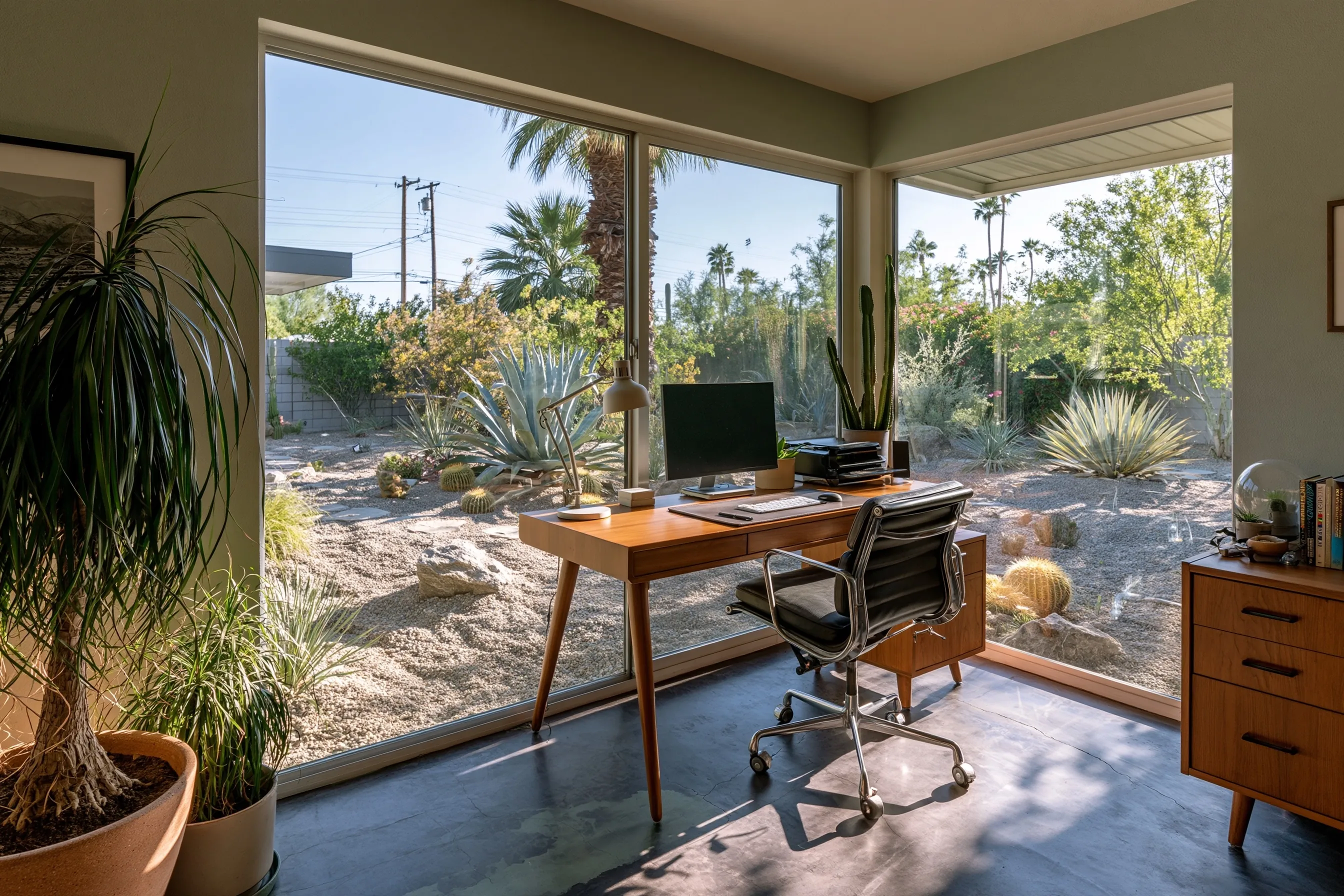
Color does not cover a floor; it reveals it. A cream-depth grind takes dye evenly, while a deeper cut shows aggregate through the color. Cracks, filled joints and old patches take color differently from the rest of the slab and stay visible.
Because the outcome depends on what is in your slab, we recommend a test patch in an out-of-sight corner or a closet. Color variation is part of how stained and dyed concrete looks, and it is not a defect we can fully remove.
Color choices
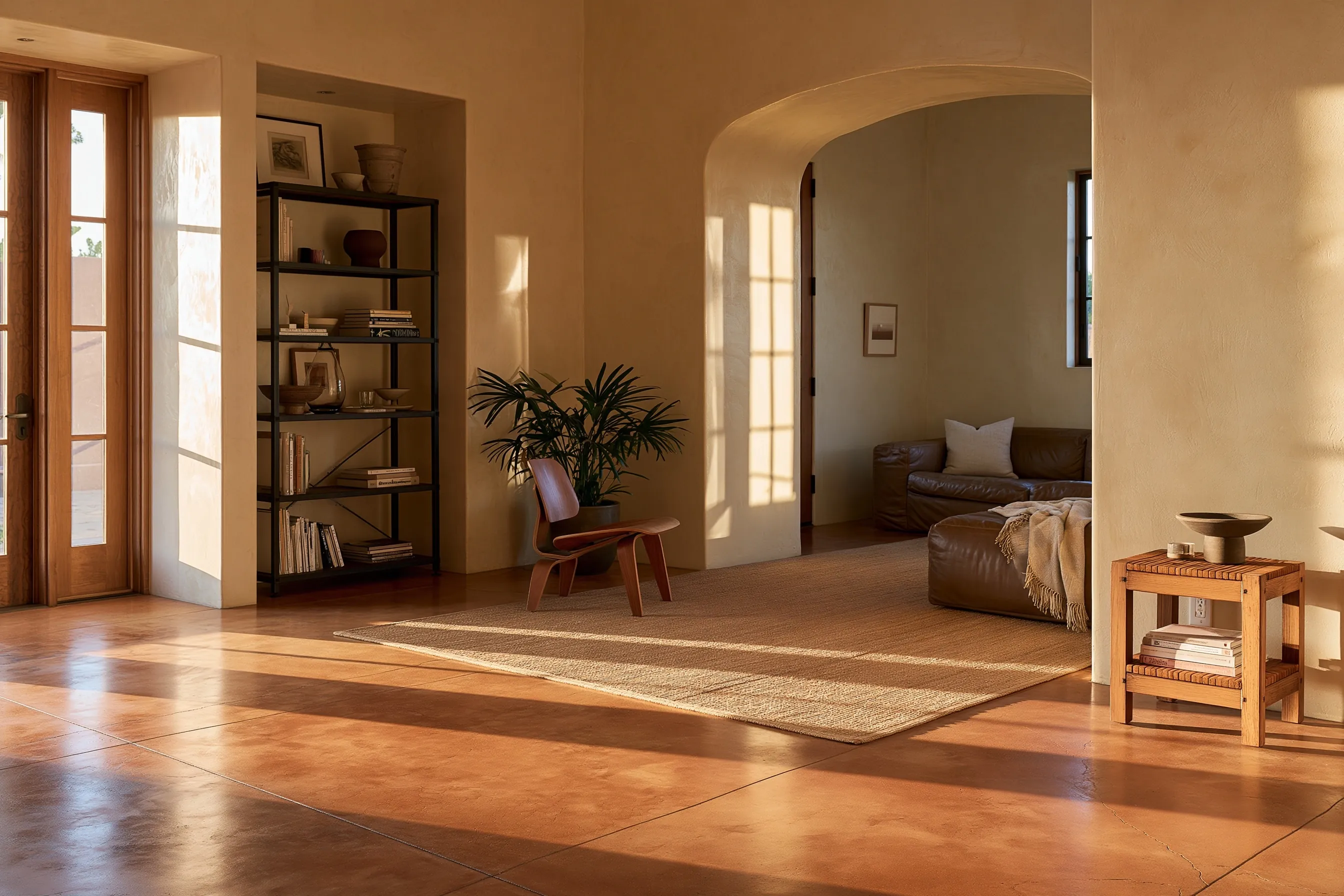
Warm choices include terracotta and sand, which echo stucco and tile roofs. Neutral choices include gray and greige, and dark choices run to charcoal and sage-charcoal blends. Ask to see a sample on concrete rather than choosing from a printed card, because color reads differently on a floor with sun on it.
Caring for a colored floor
Use a neutral cleaner as the installer recommends, and wipe spills and acids off promptly. A guard may or may not be worth adding for a given room. How a color behaves in bright light varies by product, so ask what exact product is being used before signing off.
Stain, dye or paint
Paint and some coatings sit on top of the slab as a film and can wear or lift. Stain and dye go into the surface, and a polish or sealer finishes the floor. That is why we suggest them to owners who want the look of concrete in a chosen color.