
Carpet, tack strip and glue
Carpet comes up with its pad and tack strip, and the slab may still carry adhesive. Glue has to be removed before polishing, because it clogs diamond tooling and leaves patches that take color and shine differently.
Typical cost in Peoria
Underneath old carpet, tile, vinyl or a worn coating sits the slab, and Peoria Polished Concrete brings that slab back into condition for Peoria owners. Restoration means uncovering it, stripping whatever is bonded to it and repairing it so it can take a polish or a sealer.
The work suits homes in Peoria and in nearby Surprise and El Mirage whose original tile or carpet is ready to come out, and small business floors that are being stripped back.
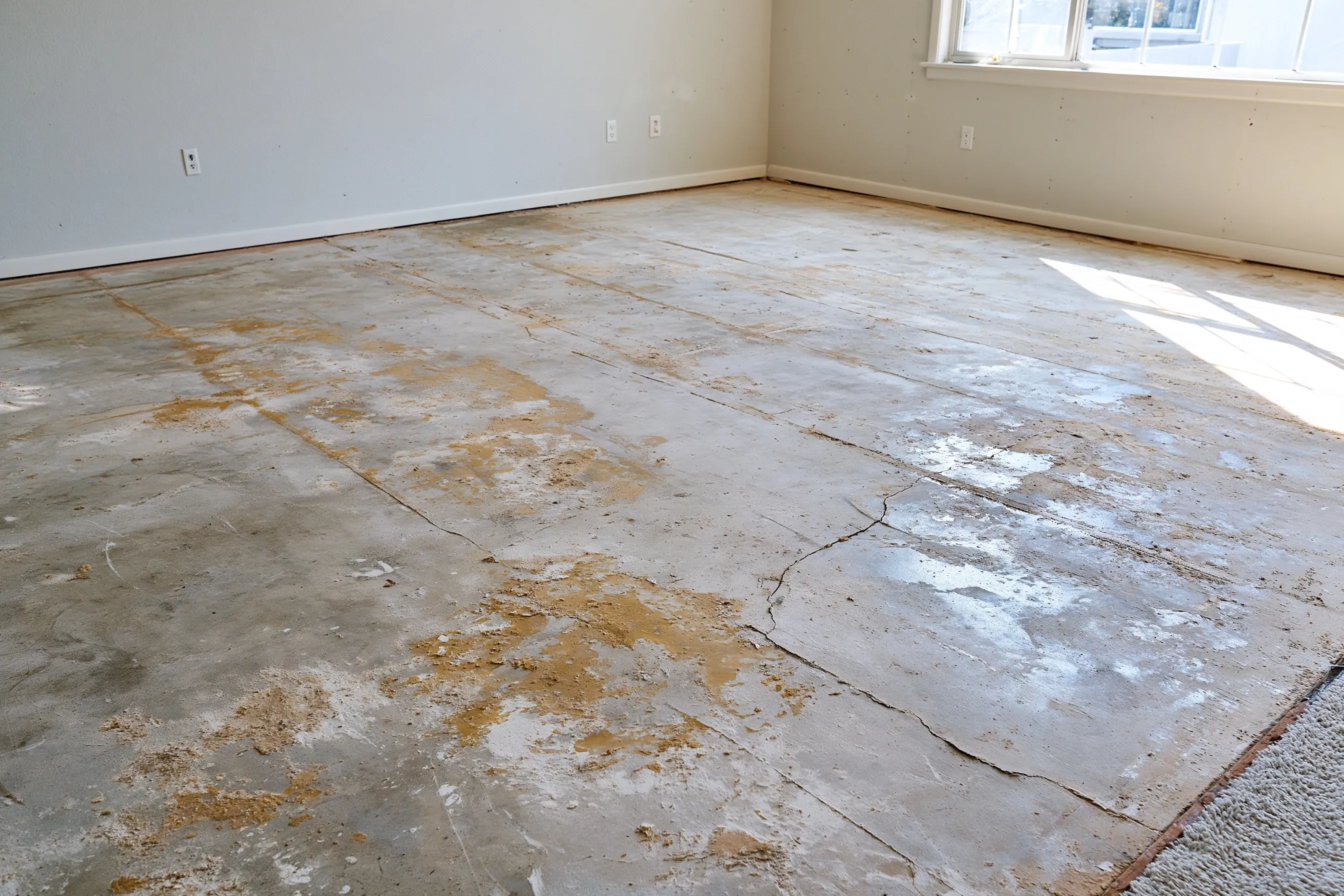
Carpet comes up with its pad and tack strip, and the slab may still carry adhesive. Glue has to be removed before polishing, because it clogs diamond tooling and leaves patches that take color and shine differently.
Tile is lifted, and the thinset under it is ground off. That is more work than carpet and leaves a slab with chips and ridges that grinding flattens as far as the tooling can.
Paint and old coatings are ground off, since a polish cannot work through a film. We test a small area to learn what is on the slab before choosing the tooling.
Floor tile and the black adhesive under it in older homes can contain asbestos. Peoria has fewer pre-1980 homes than much of the valley, 9.5 percent of its housing, but a floor from before 1980 should be tested before it is ground.
Maricopa County's asbestos handbook explains that owner-occupied homes of four or fewer dwelling units are not regulated facilities under the county rule, while commercial buildings are, and that flooring tile that is sanded or ground, and mastic removed with power tools, can become regulated or release fibers. If you are not sure what is in your floor, have it tested and read the handbook before work begins; we do not ask anyone to skip testing.
Control joints are cuts made to guide where a slab cracks, and they do not stop cracks. In a polished floor the joints show, and they are normally filled in. Hairline cracks can be filled too, and filled areas stay visible to a degree.
A crack that is widening, a floor that has moved or a slab with settlement is a structural question. We do not do foundation or structural work, so that goes to an engineer first.
A slab that has been covered for years can show patched plumbing trenches, saw cuts, trowel marks, stains and a soft or uneven surface. Polishing does not flatten a slab; it shows the flatness it has. Where the surface is soft, the floor may take less shine, and a test patch tells us before the whole floor is committed.
Can you polish an existing slab? It can be done after preparation. Will the cracks disappear? No. Will old patches blend in? They may not.
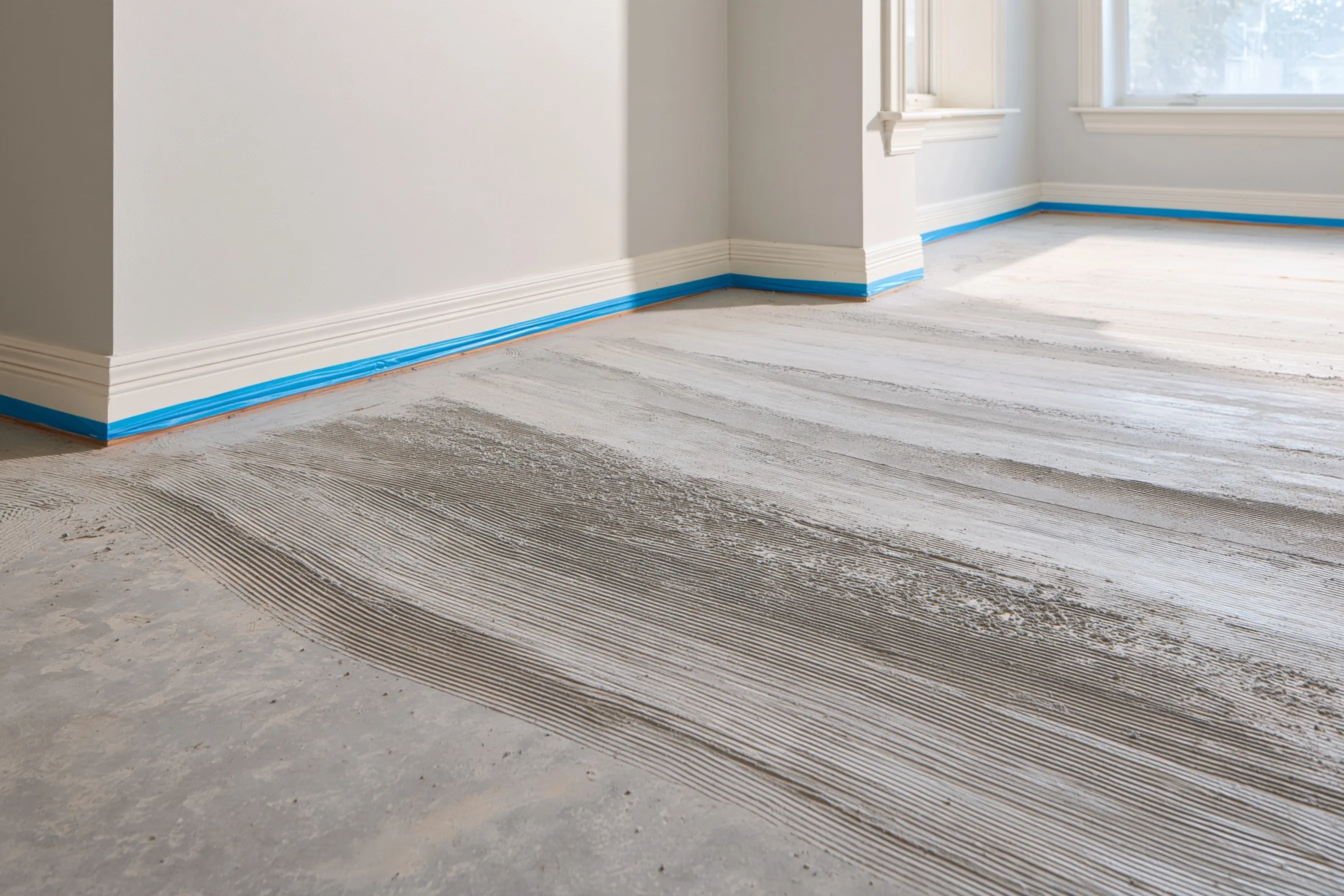
A bare slab has three routes from here: a polish, explained on the homepage, color through stained and dyed concrete floors, or a protective finish through grind and seal concrete floors.
Say what covers the floor today, roughly when it went down and what you think lies beneath. We'll get back to you soon with an estimate or any questions we have. Estimates are free and there's no obligation.
Call (623) 400-8349