What a builder garage slab brings
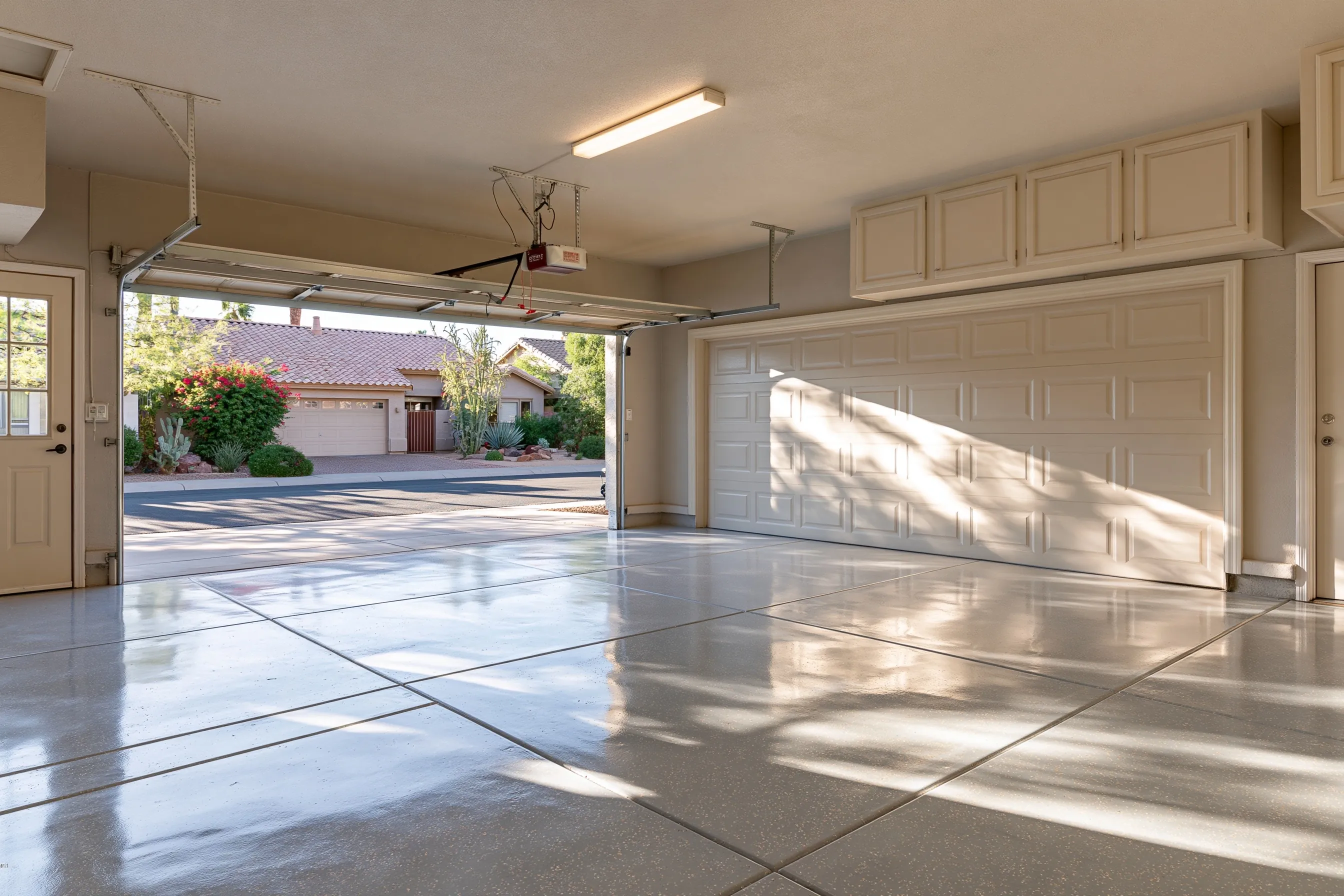
A garage slab was poured as a utility floor, not for polishing. Expect trowel marks, a few saw-cut joints, hairline cracks, possibly patched plumbing cuts and oil spots in the parking bays. Grinding takes off the top surface and some marks, but it does not flatten the slab or erase deep staining.
Industry guidance asks for a concrete surface harder than 4 on the Mohs scale before polishing, and a soft slab can polish to less shine and shed more of its sand. We test a small area first, so you know what the garage can give before the whole floor is ground.
Finish choices
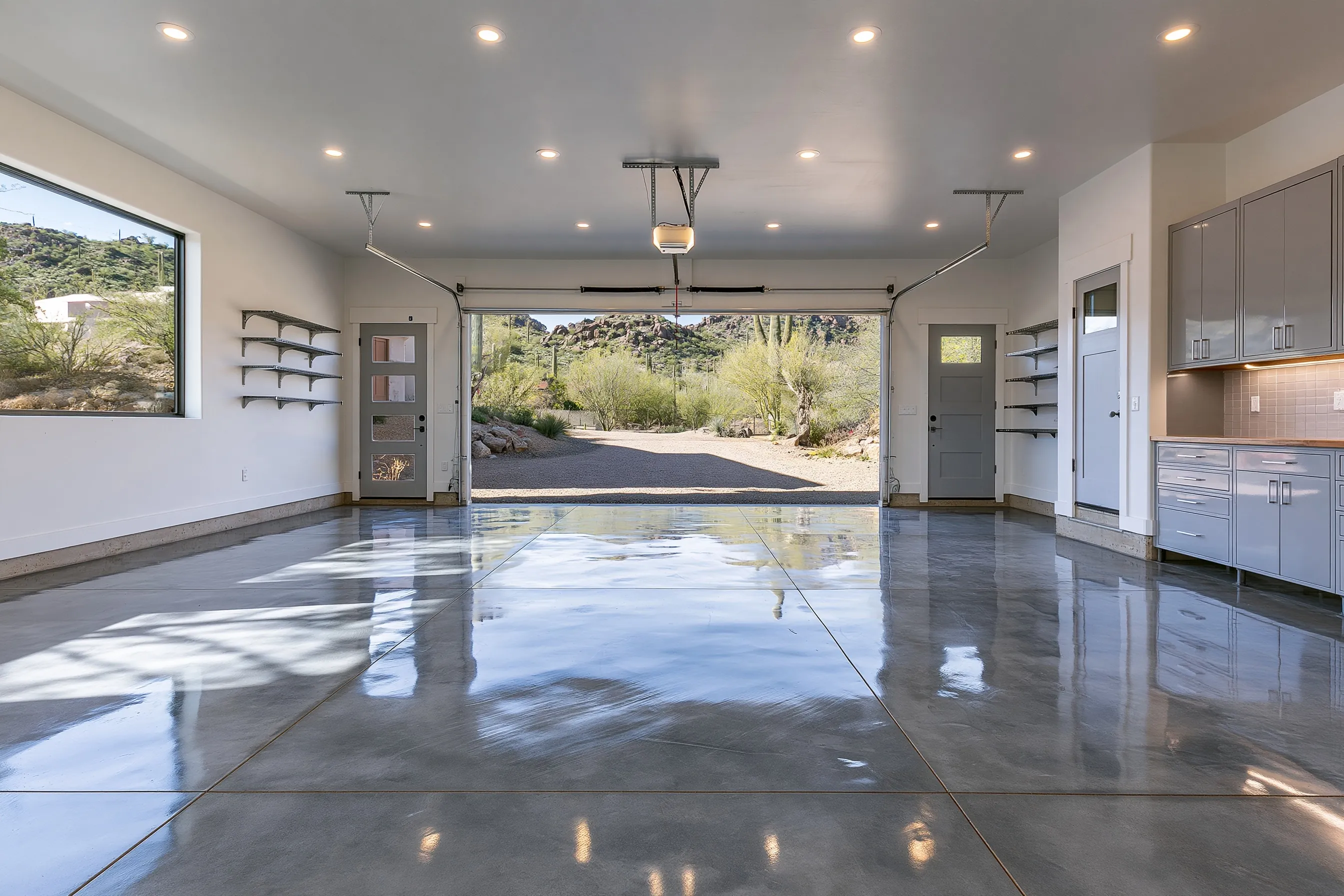
Garage owners choose between a cream or salt-and-pepper look and between a satin finish and a higher polish. A deeper grind shows more aggregate, which hides small marks better than a smooth cream surface. A dye can turn the floor charcoal, gray or a warm tone; the stained and dyed page covers color in full.
A high shine looks good in an empty bay. Where cars park on it every day, a satin finish is easier to live with, because every scuff shows less.
Oil, chemicals and wet floors
Polished concrete is not a barrier against chemicals. Clean up oil, antifreeze and battery acid promptly, and keep a mat at the door from the house.
A wet or greasy polished floor can be slick, and its shine is no measure of grip. If the garage sees car washing or a workshop sink, tell us up front so the finish can be planned around it.
What affects the price
Garage size, the level of shine, any dye, the amount of old coating or glue to remove and the number of cracks to fill all change the price. A small floor may not be cheaper per square foot, because setup is the same.
Garage owners can ask next about color, a cheaper finish or how polishing is done. Those answers sit in stained and dyed concrete floors, grind and seal concrete floors and the homepage.