Polished or epoxy
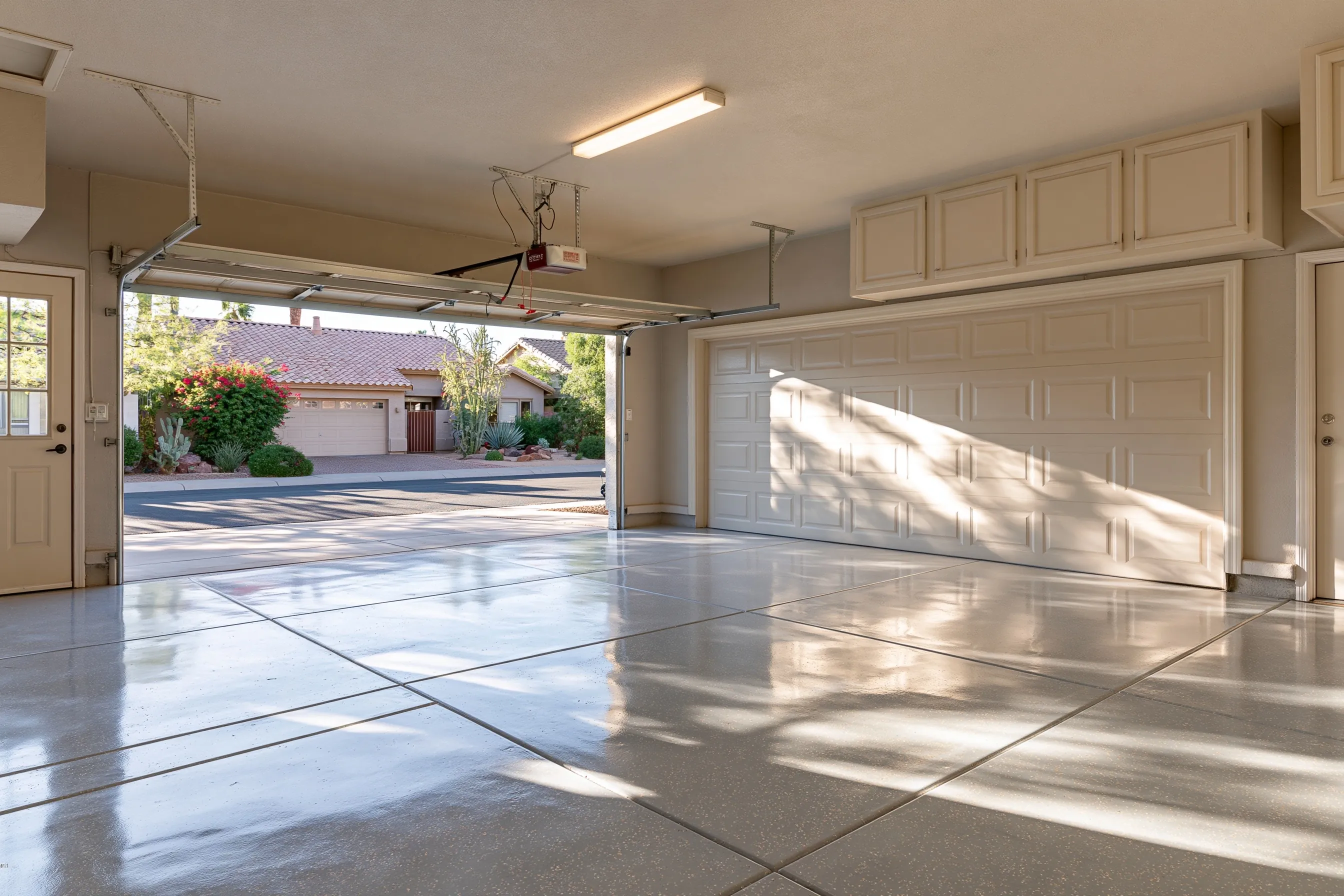
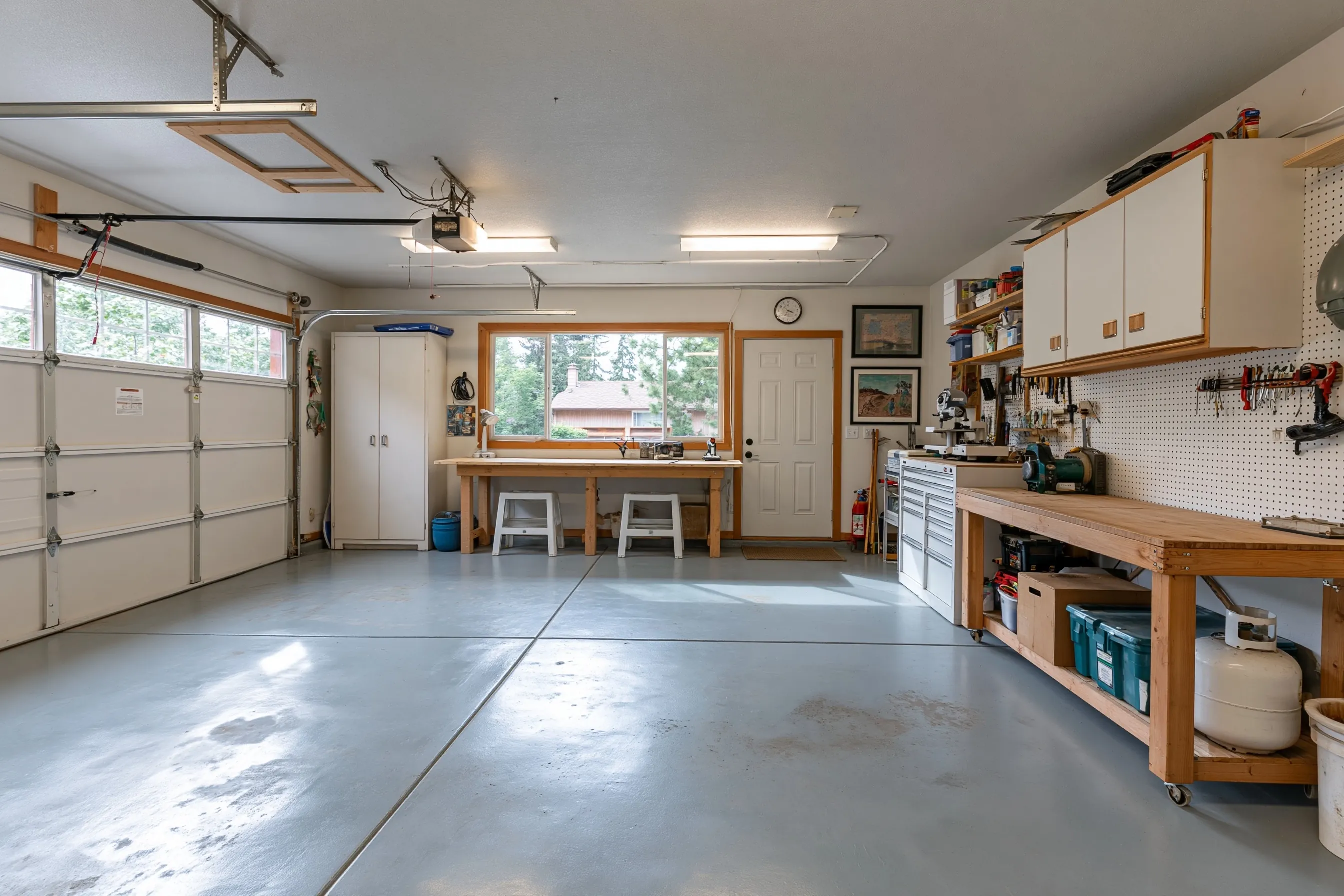
Epoxy, polyaspartic and urethane are films rolled onto a prepared slab, and they are not our trade. A polished floor carries no film that can lift, so there is nothing on top to peel. A corner used for charging batteries or handling chemicals may call for a chemical-resistant coating rather than bare polished concrete. The garage page holds the fuller comparison.
Dust and clean-up
Grinding throws off fine concrete dust, which is why it is worth asking any contractor about control. Federal silica rules for construction accept either a steady water feed at the cutting surface or a dust collector recommended by the machine maker with a 99 percent efficient filter. In an enclosed room a HEPA vacuum collects what settles between passes. In an occupied house, we clear furniture, hang barriers over doorways and wipe surfaces down after the last pass.
Existing slab or new slab
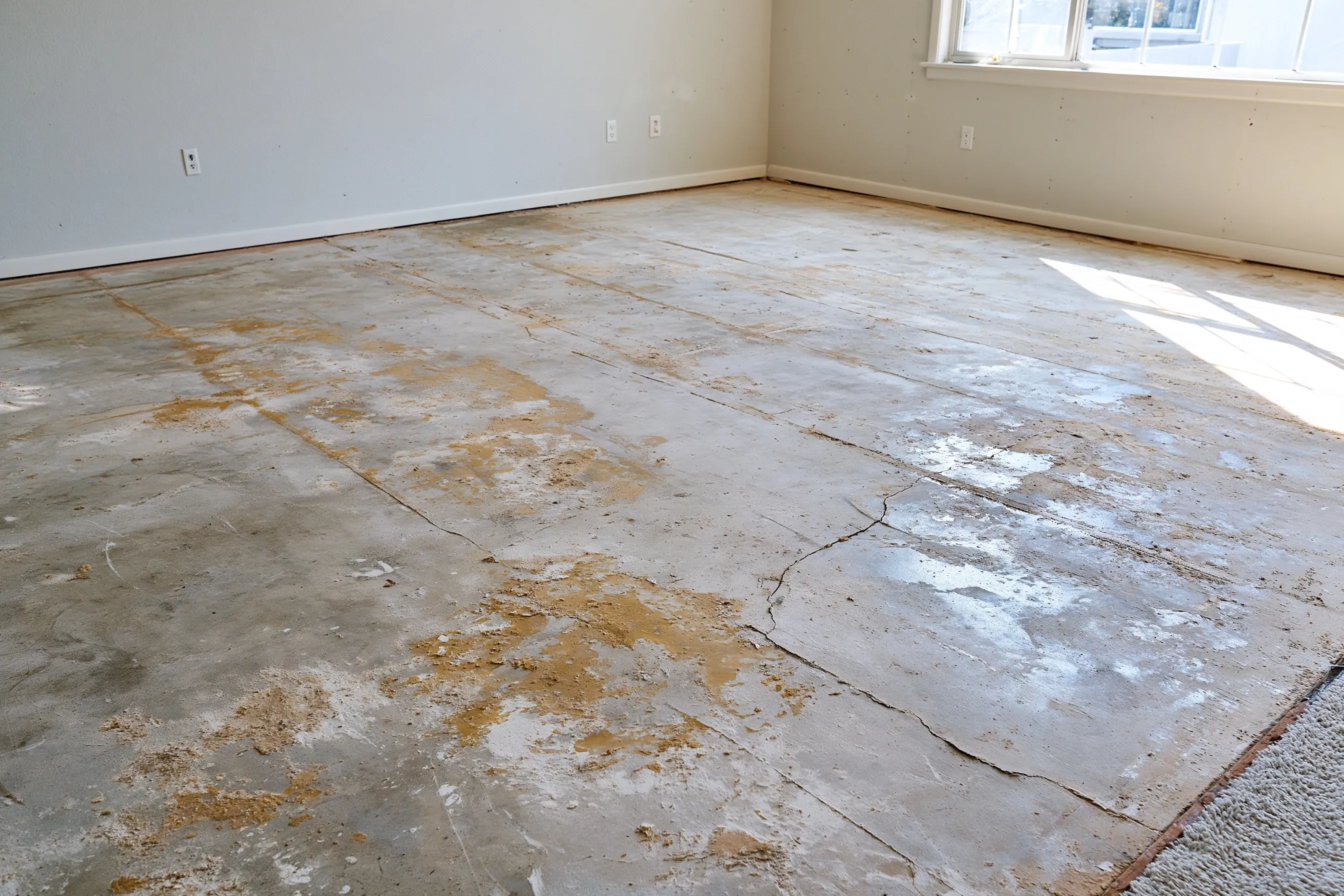
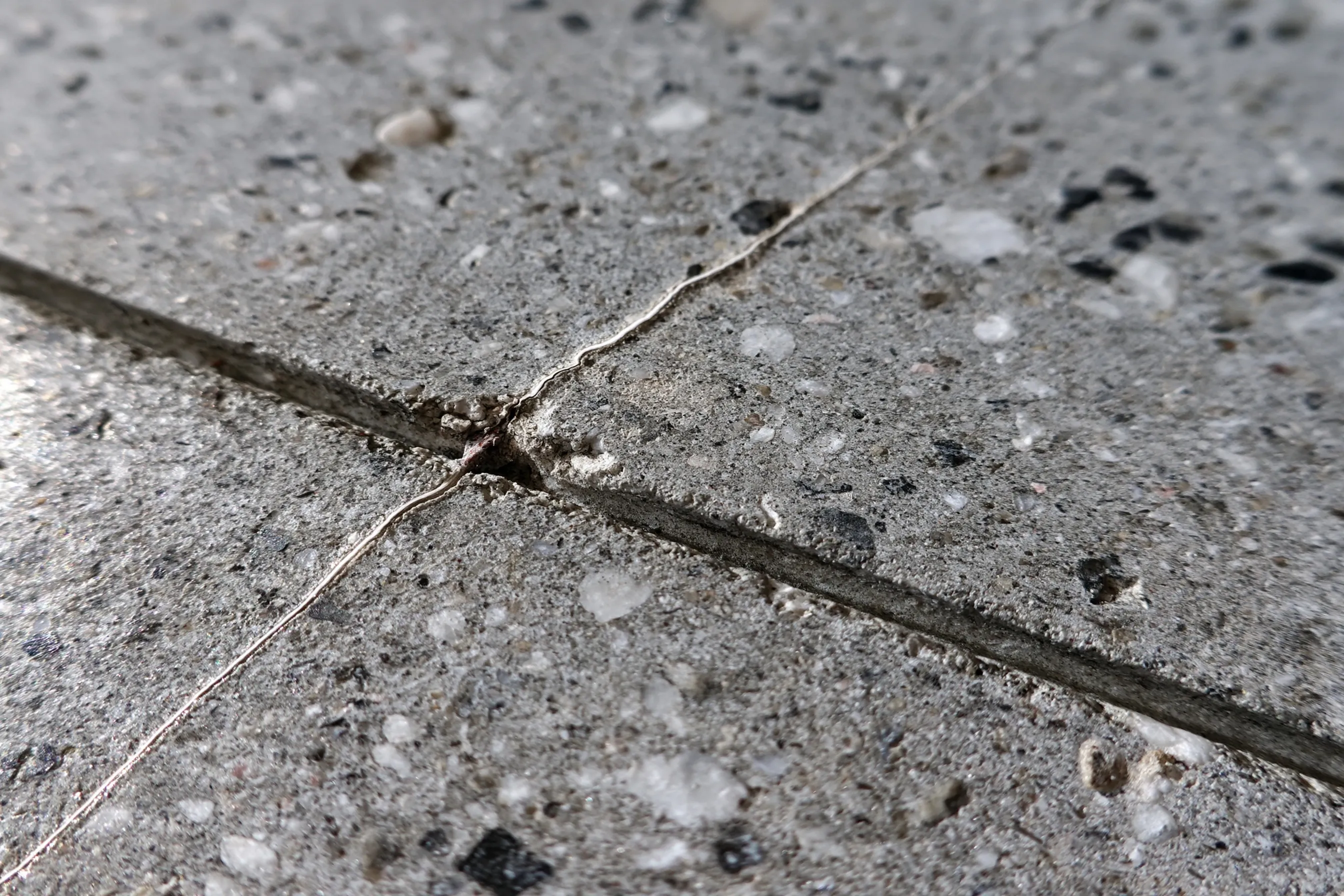
An existing slab can be polished once carpet glue is ground off and thinset is removed, but polishing does not make a slab flat or hide its history. Old patches, saw cuts and hairline cracks will show. A newer builder slab may be fine to polish, yet nothing about its mix or curing is known until it is tested, so a small test area comes first.